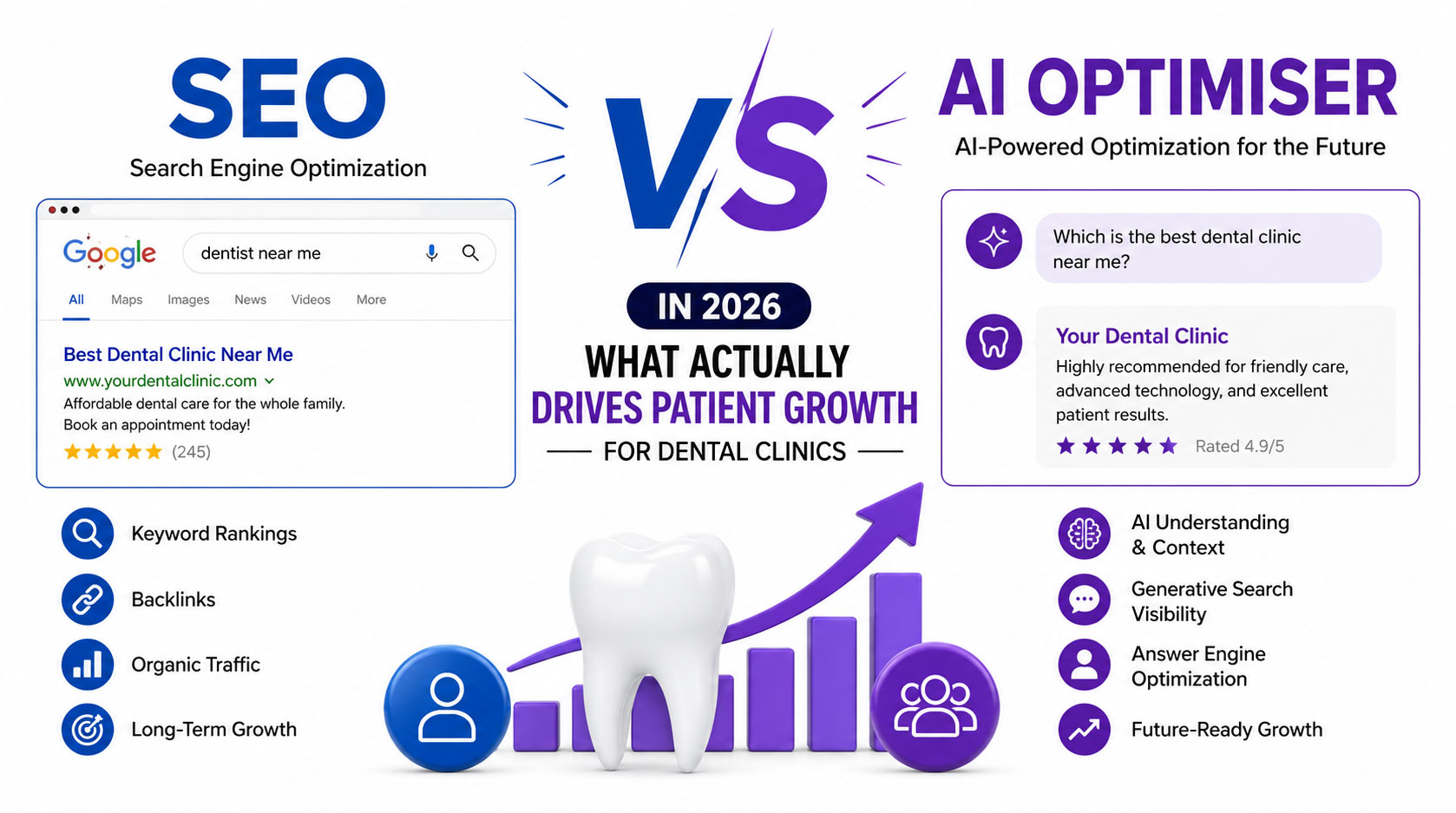
Many Australian dental clinics are spending money on both SEO and AI tools but are not seeing a real increase in patient bookings. This blog explains exactly what SEO does, what an AI optimiser actually does, and why they are not the same thing. You will learn which one builds long-term visibility on Google, which one helps you work faster, and how a smart combination of both leads to steady patient growth in 2026. If you want more patients finding and booking your clinic online, this guide will show you the clearest path forward.
The Modern Dental Patient Journey Has Changed
The way patients find a dentist today looks very different from even a few years ago. Most people start with a Google search, typing something like “dentist near me” or “teeth whitening in Melbourne.” Google then shows them a map with nearby clinics, along with star ratings and reviews.
Patients compare two or three clinics by looking at the photos, services listed, and what other patients have said about their experience. After that comparison, trust plays a major role. A clinic with detailed, honest reviews and a professional website is far more likely to receive a booking than one with incomplete information or negative feedback.
The journey boils down to four simple steps:
- Search: They type in their problem on Google.
- Compare: They look at a few clinics, checking photos, services, and prices.
- Trust: Reviews and your online vibe win them over.
- Book: They click to call, message, or book an appointment online.
What Is SEO for Dental Clinics in 2026?
Local SEO and map visibility:
Search Engine Optimisation is the process of making your clinic easier to find on Google and other search engines. For dental clinics in Australia, this means focusing on local SEO strategies that help your practice appear when nearby patients are searching for dental services. A complete and accurate Google Business Profile is one of the most important starting points, because this is what shows up on Google Maps and in local search results.
Treatment-focused, informative content:
SEO involves creating treatment pages and blog content that answer the real questions patients have before they book, such as what a root canal involves, how long implants last, or what clear aligners cost.
Technical optimisation: speed, mobile and structure:
Technical factors also matter, including how fast your website loads, whether it works well on a mobile phone, and how clearly your site is structured.
Building authority with backlinks, reviews, and consistency:
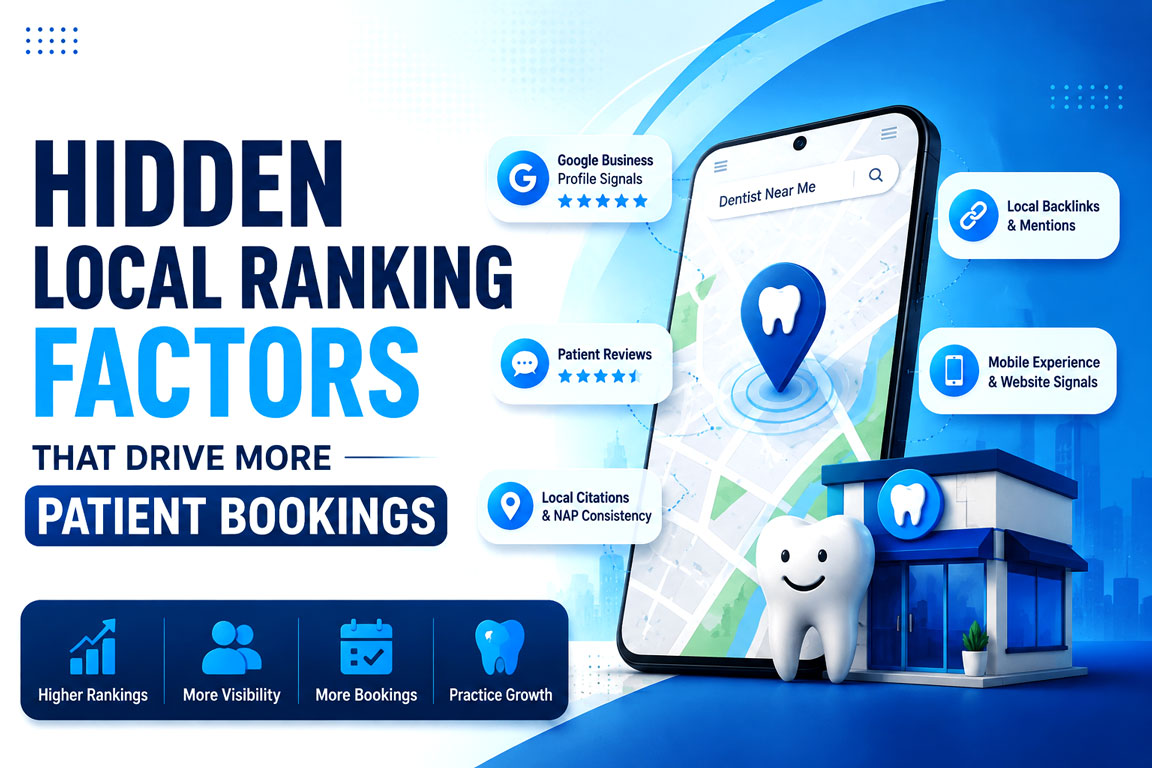
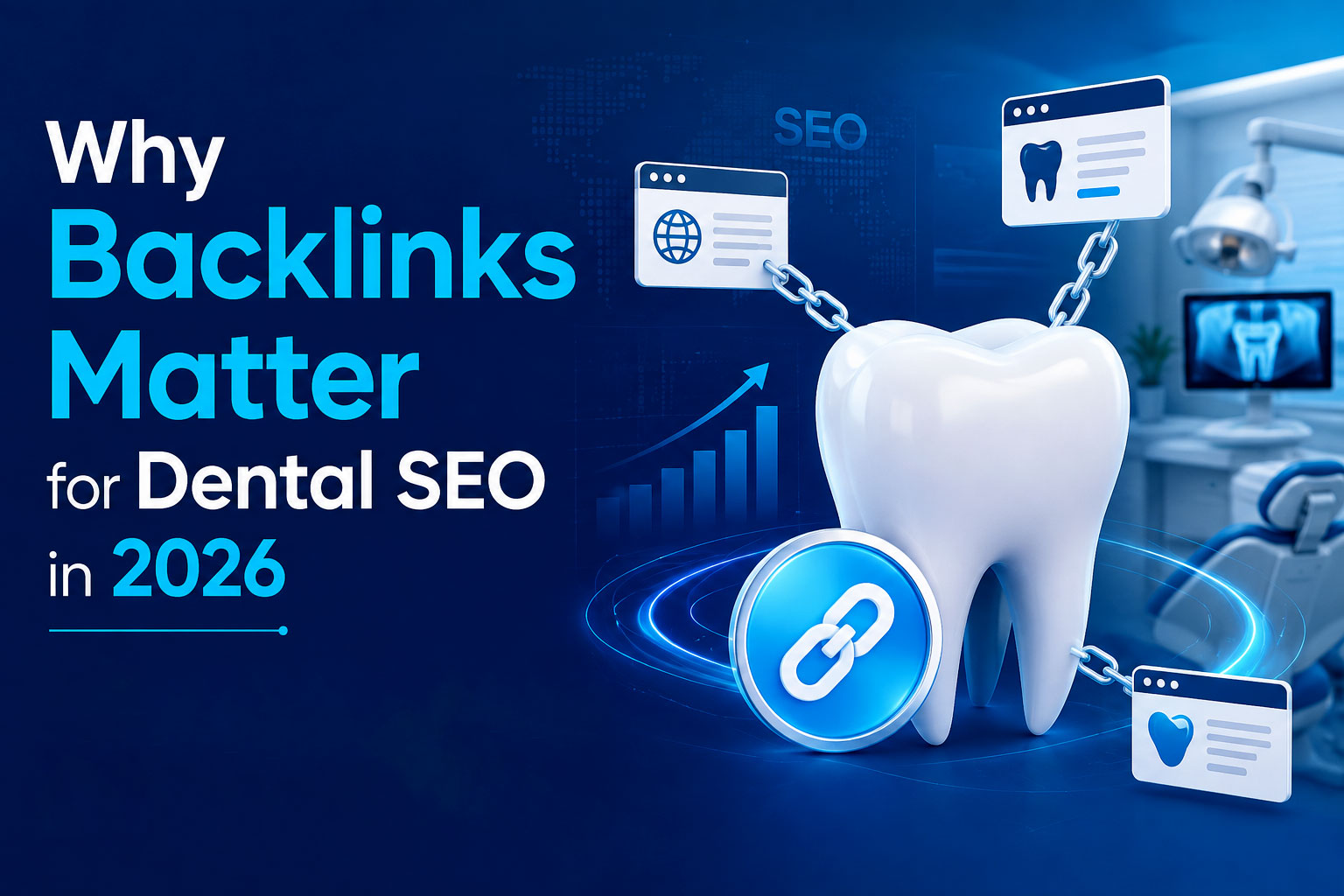
Backlinks from trusted local websites and directories, along with regular positive reviews from patients, all help to build your clinic’s authority in Google’s eyes over time. SEO is not a one-time task but an ongoing investment that builds momentum the longer you commit to it.
What an AI Optimiser Actually Does
An AI optimiser is a technology-driven tool that applies artificial intelligence to streamline and support your day-to-day marketing activities. It can assist in drafting content for blog posts, social media captions, or email campaigns. It can suggest ideas when you are stuck on what to write, generate templates for appointment reminders, and help you analyse data from your website or advertising campaigns to highlight what is working.
Some AI tools can also help you spot trends in patient feedback or automate follow-up messages. Each of these capabilities offers real practical value by cutting down the time spent on routine marketing tasks. However, it is important to understand that an AI optimiser is a support tool, not a growth driver. It helps you produce and manage content faster, but it does not control where your clinic appears in Google search results, and it does not build the kind of online authority that brings in new patients consistently.
SEO vs AI Optimiser: Key Differences That Matter
Visibility vs Efficiency
- SEO = Visibility:
SEO helps your clinic appear in Google search results and on Google Maps, which are the two places where most dental patients begin their search. A stronger position in these results means more patients can find and contact your clinic. - AI Optimiser = Efficiency:
An AI optimiser helps you work faster once a strategy is already in place. It helps you produce content and manage tasks with less effort, but it does not determine whether your clinic appears at the top of a local search or further down the page.
Long-Term Growth vs Short-Term Help
- SEO = Long-Term Growth:
Strong SEO builds results over months and years. A well-optimised website with quality content, good reviews, and consistent local signals continues to attract new patients long after the initial work is done. Think of it as a digital asset that grows in value over time. - AI Optimiser = Short-Term Help:
An AI tool is useful for day-to-day tasks, but if you stop using it, your workflow slows down. It does not leave behind a lasting online presence, and clinics that treat AI as a replacement for SEO often stay busy with content creation without seeing any real increase in bookings.
Trust Building vs Content Help
- SEO = Trust Building:
When your clinic appears prominently in search results with detailed service pages, genuine patient reviews, and accurate information, patients feel confident before they even contact you. SEO is one of the most powerful ways to build that trust online. - AI Optimiser = Content Help:
AI tools can help you draft content that supports your SEO, but the trust itself comes from your clinic’s real experience and genuine patient reviews. AI-generated content published without careful review can include small errors that reduce trust rather than build it.
Ranking Power vs Support Tool
- SEO = Ranking Power:
Only SEO gives your clinic the power to rank higher on Google. Consistent local SEO investment can place your clinic in top results for searches like “family dentist in Brisbane” or “emergency dental near me,” bringing in a steady flow of new patient enquiries each month. - AI Optimiser = Support Tool:
An AI optimiser can help you organise and improve the content that feeds into your SEO strategy, but it cannot control where Google places your clinic in its results. The ranking power belongs to SEO alone.
Limitations of AI Optimisers in Dental Marketing
It is important for dental clinic owners to be realistic about what AI tools cannot do. They cannot directly improve your Google rankings, because rankings are determined by a wide range of SEO factors that AI does not control. They cannot build local authority through backlinks or directory listings, which are essential for appearing in local search results and Google Maps.
AI-generated content, when published without careful editing, can sometimes contain small inaccuracies about dental procedures, pricing, or regulations, which is a serious concern for a health-related business where patients make decisions based on what they read. Finally, AI tools have no influence over your Google Maps visibility, which depends on a fully optimised Google Business Profile, consistent business information across the web, and a steady flow of genuine patient reviews.
What Successful Dental Clinics Are Doing in 2026
The dental clinics that are growing steadily in 2026 share a few clear habits. They invest consistently in SEO, keeping their Google Business Profile updated with current hours, photos, and services. They create detailed, patient-focused treatment pages that explain what a procedure involves, what patients can expect during recovery, and what the typical costs are, because this kind of honest and thorough information builds confidence before a patient even picks up the phone.
They actively manage their online reputation by encouraging happy patients to leave reviews and responding professionally to all feedback. Most importantly, they track their results through real metrics such as the number of calls coming from Google, the number of online enquiries submitted through their website, and the number of new bookings each month. This data-driven approach allows them to focus on what is actually working and improve what is not.
Common Mistakes Dental Clinics Make
One of the most common mistakes is relying too heavily on AI-generated content without reviewing it carefully. When this content is published as-is, it can feel impersonal, include small errors, and fail to build the trust that patients need before booking. Another frequent mistake is ignoring the basics of local SEO, such as keeping the Google Business Profile updated and ensuring that the clinic’s name, address, and phone number are consistent across all online directories.
Many clinics also make the mistake of switching between different tools and platforms too often, without giving any single strategy enough time to show results. SEO takes months to build momentum, and constantly changing direction resets that progress. The biggest mistake of all is focusing on the tools themselves rather than on what patients actually need, which is clear information, a trustworthy reputation, and an easy way to book an appointment.
SEO vs AI Investment: Where Should Clinics Spend More?
When it comes to deciding where to allocate your marketing budget, SEO should be the priority for any dental clinic that wants sustainable growth. SEO builds lasting digital assets, including a well-optimised website, strong local rankings, authoritative content, and a solid review profile, that continue to attract patients for years after the initial investment.
AI tools, while genuinely useful for day-to-day efficiency, do not create this kind of lasting value on their own. A clinic that invests heavily in AI tools but neglects its SEO foundations will likely find that its online visibility remains flat, no matter how efficiently it is producing content. The smarter investment is to build your SEO foundations first, and then use AI tools selectively to support and speed up the work that your SEO strategy requires.
Frequently Asked Questions
No, AI tools cannot replace SEO. AI helps you work faster and produce content more efficiently, but it does not control your Google rankings or build the local authority that brings in new patients. SEO remains the only strategy that directly improves your visibility in search results.
Most dental clinics begin to see meaningful improvements in visibility and website traffic within 3 to 6 months of consistent SEO work. Stronger results, including a noticeable increase in calls and enquiries, typically appear between 6 and 12 months with ongoing effort.
Yes, AI tools are genuinely useful when used in the right way. They save time on content drafting, automate routine tasks, and help you stay consistent with your marketing. The key is to use them as a support layer within a broader SEO strategy, and to always review AI-generated content before publishing it.
Consistency is the most important factor. A complete Google Business Profile, accurate and helpful content on your website, genuine patient reviews, and regular updates all work together over time to build the kind of online presence that consistently attracts and converts new patients.