What Is AI Dental Marketing?
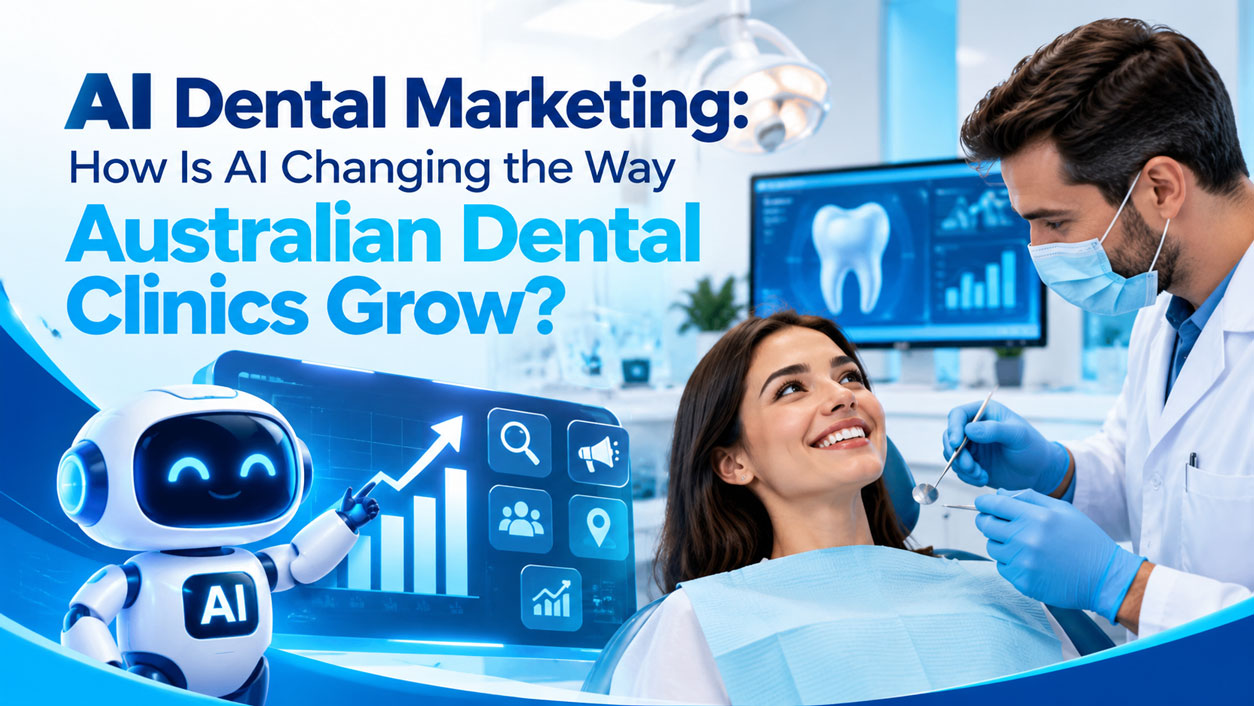
AI dental marketing means using tools such as language models and automation to attract, convert, and retain patients, while a real person reviews anything clinical or promotional before it goes out. These tools support the whole patient journey, from research through to booking and recall, covering:
Key AI applications
- Search and content — intent research, topic planning, drafting.
- Conversation — website chat, AI phone answering, SMS.
- Conversion — lead scoring, follow-up sequences, booking.
- Advertising — creative variations, bidding, budget allocation.
- Analysis — call transcription, enquiry classification, ROI reporting.
AI automation vs strategic dental marketing
Automation asks how a task can be done faster, while strategy asks whether it should be done at all, and for whom. A clinic with strong rankings but a slow phone needs faster call answering.
How AI Is Changing the Dental Patient Journey
Patients often ask full questions online and receive answers drawn from sources search engines judge trustworthy, which makes accurate website content more important than ever. Responding quickly matters enormously too, since research on lead response times shows clinics replying within minutes convert far more enquiries than those that wait hours. AI can also sort enquiries by urgency and reach out to lapsed patients, since bringing someone back usually costs less than attracting a new patient through advertising.
AI and Dental SEO: From Search Rankings to AI Discovery
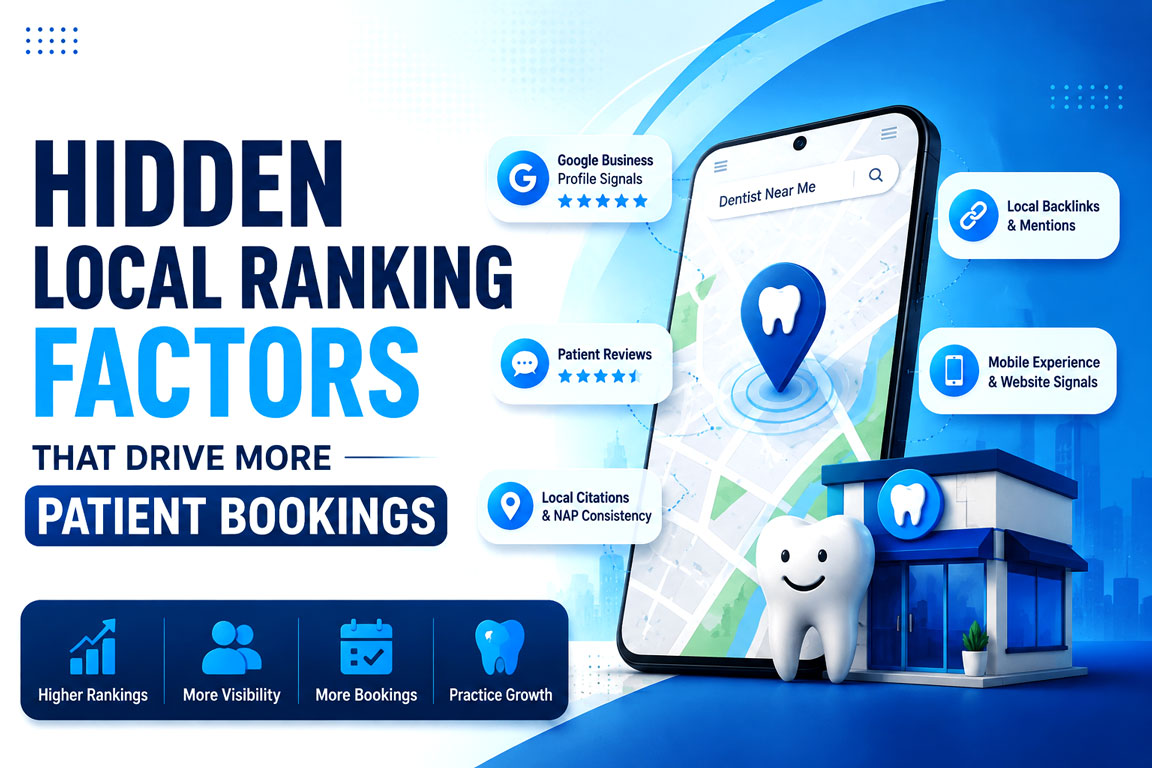
AI genuinely strengthens search optimisation when it supports proper foundations rather than replaces them. It can identify what patients are searching for, grouping questions around cost, pain, safety, or location, and check whether existing content answers every question a patient might have. Local SEO remains essential too, meaning an accurate Google Business Profile and steady genuine reviews.
AI cannot replace a strong website foundation, since it can only reference information it can find and trust.
AI Overviews and How Patients May Find Dentists in 2026
Search is becoming more conversational, with longer questions and many searches ending without a click through to a website, so clinics should aim to be included directly within AI-generated answers rather than ranking further down the page. Vague statements such as “costs vary depending on your needs” tend to be skipped over, while a stated price range is far more likely to be referenced.
Genuine authority comes from clear dentist qualifications and honest, location-specific content.
AI Chatbots and Virtual Assistants for Dental Clinics
A website chatbot suits answering common questions about hours, parking, payment plans, and what a first visit involves, and it captures enquiries outside business hours, since many people search for a dentist in the evening when in discomfort.
Set clear rules for handing a conversation to a real person, particularly for pain, swelling, bleeding, or a question about a patient’s own treatment, since a chatbot should never give clinical advice.
AI Receptionists for Missed Calls and After-Hours Enquiries
An AI receptionist answers calls your front desk cannot reach, including outside business hours, and provides basic information such as location, hours, and payment options. It captures new patient enquiries accurately and takes appointment requests for staff to confirm the next business day.
Complex situations still need a real person, and any genuine emergency should always go through your normal after-hours process.
AI Appointment Booking and Automated Patient Follow-Up
Online booking works best with as few steps as possible, since every extra form field reduces how many people complete it. A fast initial reply followed by a gentle sequence of calls and messages over the following week converts far more enquiries than a single attempt. Recall campaigns based on treatment history, along with reminders about cancellation openings, can meaningfully reduce empty appointment slots over a year.
AI Content Marketing for Dental Practices
AI tools are genuinely useful for producing a first draft quickly, but they are not a reliable final author for health-related content. A good approach is to look through the real questions patients ask by phone, email, and chat, then turn those into blog posts and frequently asked questions, since this content is read by real patients and referenced by AI search tools alike.
Every piece still needs proper clinical review and a check against Australia’s advertising rules before publishing.
AI-Powered Dental Advertising and Campaign Optimisation
AI generates 15 ad headlines in a minute; you keep the three that are accurate and compliant. It surfaces what weekly reports hide which suburb converts, which hours produce the best calls and manages bidding, though automated bidding needs the right conversion event or it buys useless form fills. Judge winners on bookings: a $9 click converting at 30% beats a $2 click that books nobody. None of it works without call tracking, chat attribution and offline conversion import from your practice software.
Measuring the Real ROI of AI Dental Marketing
Website traffic alone tells you very little; what matters is how many visitors turn into genuine, qualified enquiries. Worth tracking each month are:
- Calls and appointment requests received
- The percentage of enquiries that become booked patients
- The actual cost of acquiring each new patient, rather than simply the cost of each lead
Illustrative example only: a clinic spending four thousand dollars a month that receives eighty enquiries and books twenty-four patients would have a patient acquisition cost of around one hundred and sixty-seven dollars, a figure that faster follow-up can improve without spending any more on advertising.
AI Compliance, Privacy and Patient Trust
Under Australian law, responsibility for marketing content sits with the dental practice and its practitioners, not the software used.
-
AHPRA considerations.
Section 133 of the Health Practitioner Regulation National Law prohibits advertising that is false or misleading, uses testimonials about clinical care, creates unreasonable expectations of benefit, or offers inducements without stating terms.
-
Protecting patient information.
Practices hold sensitive health information under the Privacy Act 1988, and health providers remain among the highest-reporting sectors in OAIC data breach statistics. Never paste patient records into a general-purpose AI tool.
-
Reviewing AI communication.
Sign off templates, chatbot responses and automated messages before launch.
-
Avoiding unsupported claims.
No guarantees, no superlatives — “painless implants guaranteed” breaches several rules at once.
-
Human oversight.
Every AI-assisted message should be reviewed by a real person, and AI should never make clinical decisions
Common AI Dental Marketing Mistakes to Avoid
- Publishing generic AI content that reads like every competitor’s site and risks being inaccurate.
- Automating every patient interaction, which can feel impersonal to anxious patients.
- Adopting AI tools without a clear strategy, rather than identifying the problem first.
- Ignoring search visibility, since even the best AI receptionist cannot answer calls that never come in.
- Failing to regularly check AI-generated responses for accuracy and tone.
- Measuring conversations automated rather than appointments actually booked.
How Smart Dental Marketing Can Help Clinics Use AI Strategically
Smart Dental Marketing helps Australian dental clinics use AI thoughtfully, always paired with a genuine local SEO strategy, accurate content, and strong lead follow-up. This includes:
- AI-supported search optimisation
- Local visibility through your Google Business Profile
- Communication automation
- Performance tracking tied to actual appointments booked
Conclusion
AI has become a genuinely important part of modern dental marketing, though the real goal should always be smarter marketing rather than simply more automation, since powerful AI built on a weak strategy still leads nowhere useful. Combining AI with solid SEO foundations, human expertise, and a genuine focus on patients produces far stronger results than any single tool alone. Clinics that adopt AI deliberately, addressing one problem at a time, are well placed to improve efficiency and build steady growth.