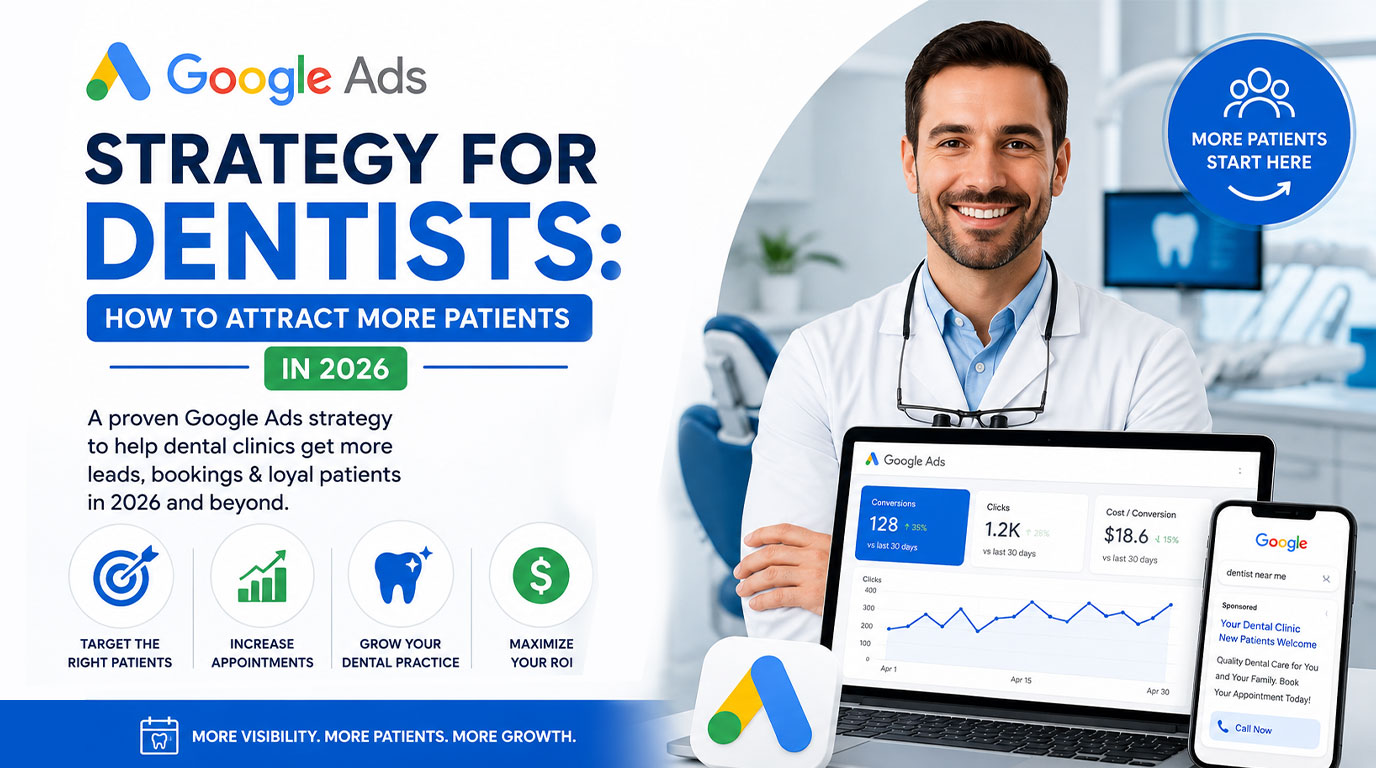
Most dental clinics running Google Ads are burning money. Not because Google Ads doesn’t work it does but because their campaigns are set up the wrong way. Wrong keywords, wrong pages, wrong structure. In this guide, you’ll get a clear, step-by-step Google Ads strategy built specifically for dental clinics in 2026. No fluff. Just what actually works to bring in patients who book and show up.
Why Google Ads Works for Dental Clinics
Google Ads targets people at the precise moment they are searching for dental help. Unlike social media ads that interrupt people who may not need a dentist, or SEO which can take six to twelve months to deliver results, Google Ads puts your clinic at the top of search results immediately.
Common high-intent searches include “emergency dentist near me,” “dental implants consultation,” “teeth whitening Sydney,” and “kids dentist Brisbane.” People using these searches are not browsing — they are ready to act. Key benefits include:
- Immediate Visibility — Your clinic appears at the top of Google the moment your campaign goes live.
- Location-Based Targeting — Show ads only to people searching within a few kilometres of your practice.
- Measurable Results — Every click, call, and booking is tracked so you know exactly what your spend is delivering.
Common Google Ads Mistakes Dentists Should Avoid
Running One Campaign for Multiple Services
Mixing implants, whitening, and emergency dentistry into one campaign confuses Google and raises your costs.
Broad or Irrelevant Keyword Targeting
Generic keywords like just “dentist” attract people who are not ready to book, wasting your budget on useless clicks.
Sending Traffic to a Generic Homepage
If someone clicks an implants ad and lands on your homepage, they will leave without booking. Always send them somewhere focused.
Poor Conversion Tracking
Without tracking, you cannot tell which ads are working. You end up spending money without knowing what it is actually delivering.
Ideal Google Ads Campaign Structure for Dentists in 2026
Each campaign should focus on one service. This keeps your keywords tight, your ads relevant, and your cost-per-click lower.
Recommended Campaign Types
Emergency Dentist Campaign
targets urgent searches like “tooth pain dentist open today” or “same day dentist near me.” Use call extensions and keep the CTA focused on calling, not filling a form.
Dental Implants Campaign
targets searches like “dental implants cost” or “implant dentist consultation.” These patients are doing research, so your landing page needs to answer pricing questions honestly.
Invisalign / Orthodontics Campaign
targets “Invisalign provider near me” and similar. Include a free consultation offer in the ad copy.
General Dentistry Campaign
targets “dentist near me”, “dental check-up [suburb]”, and family dentistry searches. This campaign feeds your base patient flow.
Cosmetic Dentistry Campaign
targets “teeth whitening near me”, “smile makeover dentist.” Visuals matter here — your landing page should show real before-and-after results.
Brand Campaign
cheap and important. Stops competitors from stealing clicks when someone searches your clinic name.
Choosing the Right Keywords for Dental Google Ads
High-Intent Keywords
Focus on keywords that show the person is close to booking, such as
- “emergency dentist near me,”
- “Invisalign dentist Sydney,”
- “kids dentist near me,”
- “dental implants cost Perth,”
- “teeth whitening near me.”
Use phrase match to keep targeting tight and relevant without missing genuine patients.
Importance of Negative Keywords
Negative keywords tell Google when not to show your ad. Add terms like “free,” “jobs,” “courses,” “cheap,” and “discount” to block job seekers, students, and bargain hunters from using up your budget. A solid negative keyword list keeps every dollar focused on real patients.
Creating High-Converting Google Ads for Dentists
Clear and Compelling Ad Copy
Write directly to the patient in plain language. Focus on solving their problem, whether that is tooth pain, a missing tooth, or a smile they feel confident about.
Unique Selling Points
Highlight what sets your clinic apart, such as same-day appointments, 20-plus years of experience, or interest-free payment plans. These details build trust fast.
Strong Calls to Action
Tell people exactly what to do next. Phrases like “Book Today,” “Call Now,” or “Get a Free Consultation” reduce hesitation and drive action.
Match Ads to Intent
Emergency ads should feel urgent and reassuring. Cosmetic ads should feel aspirational. Matching tone to intent significantly lifts conversion rates.
Ad Extensions and Assets
Add call extensions so patients can tap to call directly from search results. Location extensions show your address and distance. Structured snippets highlight your key services. These extras increase your ad’s presence on the page at no additional cost.
Landing Page Optimisation for Better Conversions
Clicks mean nothing if visitors leave without booking. Dedicated landing pages — one per service — outperform homepages every time because they stay focused on a single goal. Every strong dental landing page should include:
Treatment-Focused Content
Explain the service clearly in simple language, covering what the problem is, what the treatment involves, and what the patient can expect.
Clear Call to Action
Place a bold booking button or phone number at the top of the page so visitors do not have to scroll to find it.
Trust Signals
Show Google reviews, patient testimonials, and professional accreditations near the top. People are trusting you with their health, so credibility matters immediately.
Mobile-Friendly Design
Most Australians search on smartphones. A fast, easy-to-navigate page keeps visitors engaged and makes booking simple.
Budget and Bidding Strategy for Dental Campaigns
For new campaigns, start with Maximise Conversions as your bidding strategy. This lets Google test which keywords and times of day bring results. Once you have 20–30 conversions tracked, switch to Target CPA so you can control how much you’re paying per new patient enquiry.
A realistic starting budget for most dental clinics is $1,500–$5,000/month. Competitive services like implants in major cities may need more. But budget without structure just means losing money faster. Scale only what’s working. If your implants campaign is bringing in consults at $45 each, put more into it. If your general dentistry campaign is getting clicks but no calls, fix the landing page first before spending more.
Tracking and Optimising Google Ads Performance
Set up conversion tracking for:
- Phone calls (both from the ad directly and from your website)
- Form submissions
- Online booking completions
Without this, you’re guessing. With it, you can see exactly which keywords are bringing patients through the door and which ones are just eating budget.
Check your campaigns weekly for the first month. Look at search terms reports — these show the actual words people typed before clicking your ad. You’ll almost always find irrelevant searches that need to be added as negatives.
Google Ads Checklist for Dental Clinics
- Separate campaigns by treatment
- Use high-intent, treatment-specific keywords
- Add negative keywords from day one
- Send traffic to dedicated, service-focused landing pages
- Set up conversion tracking for calls, bookings, and forms
- Review and optimise campaigns at least once a week
How Smart Dental Marketing Can Help Your Practice Grow
Smart Dental Marketing works exclusively with dental clinics across Australia, building structured, data-driven Google Ads campaigns that attract high-quality patient enquiries and reduce cost per acquisition. Services include campaign setup and management, keyword and competitor research, landing page optimisation, and clear performance reporting.
If your clinic is spending on Google Ads without seeing consistent results, or if you want to get started properly from day one, contact Smart Dental Marketing today and put a smarter strategy in place for 2026.
Frequently Asked Questions
Most Australian dental clinics start between $1,500–$5,000/ per month, depending on location and competition. Start with a manageable amount, track what works, and increase spend only on campaigns delivering real patient enquiries.
Ads appear almost immediately, but real patient enquiries typically begin within two to four weeks. Performance continues to improve over one to three months as Google gathers more data about your campaigns.
Emergency dental, implants, Invisalign, and kids dentistry consistently perform well because patients searching for these treatments are close to booking. High-value treatments like implants also deliver a strong return on investment.
Yes. Tightly targeted campaigns, well-written ads, and strong landing pages can outperform larger clinics running poorly structured campaigns. Local targeting and a clear message often matter far more than budget size alone.