The common issue? Clinics still rely on ranking reports alone, without connecting SEO performance to real patient enquiries. This creates misleading results where rankings look strong, but bookings don’t grow. The shift in 2026 is clear: SEO success is now measured through Google Maps visibility, conversion tracking, and local search performance across multiple tools. These modern tools include Google Search Console, Ahrefs, and SEMrush, which show real results, not just keywords.
In this blog, we’ll walk you through the tools and metrics that drive dental clinic growth, including: which SEO tracking tools matter most in 2026, how to monitor local search visibility, and how to measure SEO performance that leads to real patient growth.
Why SEO Tracking Matters for Dental Clinics
One of the biggest challenges is that SEO doesn’t give instant results. Understanding search visibility and keyword performance helps you see which terms are driving real enquiries. It helps you measure the impact of SEO improvements and see if they are really increasing calls and appointments.
SEO tracking highlights patient-focused search behaviour. It includes how people search for treatments, symptoms, and costs before choosing a clinic. Then there’s the competitive side, which you may overlook. Monitoring local competitors shows you who is gaining visibility, results, and why. With SEO tracking, you know exactly what’s working and what needs to change. Without it, you’re just guessing!
Which SEO Metrics Dental Clinics Should Actually Track
-
Local Keyword Rankings
Track where you stand for location-specific, high-intent terms. These are the keywords patients use, and SEO should get you into the Top 10.
-
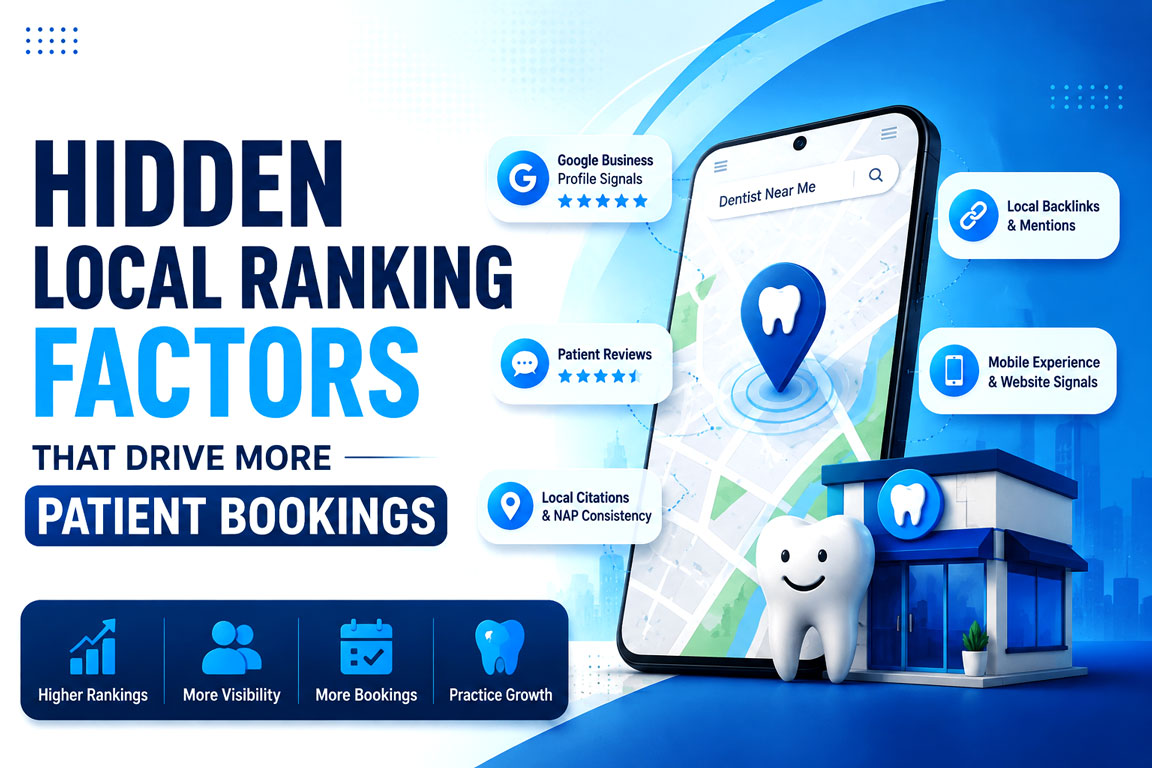
Google Maps Visibility
Monitor your performance in the “Map Pack”. It is the map snippet at the top of the search results. Local visibility is the key driver of traffic because most dental searches are local.
-
Organic Website Traffic
This is the most fundamental metric! You will see how many people visit your site from organic search.
-
Calls and Appointment Enquiries
This tracks how many patients contact your dental clinic from search results. More enquiries mean your SEO is bringing real patients.
-
Click-Through Rates (CTR)
CTR measures how often users click your search listing. Higher CTR means your listing attracts patients, while low CTR needs better messaging.
-
Conversion-Focused Landing Page Performance
This measures how well your pages turn visitors into bookings. It tracks calls, forms, and appointments, showing if SEO drives real results.
The Difference between Ranking Data and Real Patient Growth
-
High Rankings vs. High-Converting Keywords
Ranking high is not enough if patients don’t book. High-ranking keywords show your visibility, but high-converting keywords bring enquiries and bookings. This is what really matters — informational traffic increases total visitor numbers but doesn’t predict patient growth. The key KPI is patient enquiries, driven by keywords with real booking intent, since what matters most are calls and appointments.
-
Importance of Local and Treatment-Based Searches
Local searches dominate dental care because patients seek nearby services. These local treatment keywords have lower search volume but higher conversions and bring more patients. SEO success is not just about traffic growth — true SEO ROI for a dental practice is measured by enquiries, calls, and bookings.
Features to Look for in an SEO Tracking Tool in 2026
-
Local SEO Tracking Capabilities
For dental clinics, local SEO is the foundation of patient growth. Your tracking tool should monitor local rankings for treatment and location-based keywords.
-
Mobile and Desktop Ranking Monitoring
Mobile dominates for emergency searches, while desktop is used more for treatment research. Your tool should provide split-screen or separate reporting for mobile and desktop rankings.
-
Google Maps Tracking
Your Google Maps Local Pack ranking directly impacts new patient bookings. The key metric is Map Pack ranking, as top 3 get most clicks.
-
Competitor Monitoring
A reliable tool should allow you to benchmark your practice against local rivals. It should monitor your competitor rankings, keywords, backlinks, and reviews.
-
Reporting and Automation Features
Choose a tool that offers automated reporting. It schedules recurring reports or white-labels to review performance automatically and save time.
-
AI-Assisted Insights and Forecasting
The best SEO tools use AI to analyses data and predict insights. Look for features that suggest content improvements, seasonal trends, and ranking changes.
Best SEO Tracking Tools for Dental Clinics in 2026
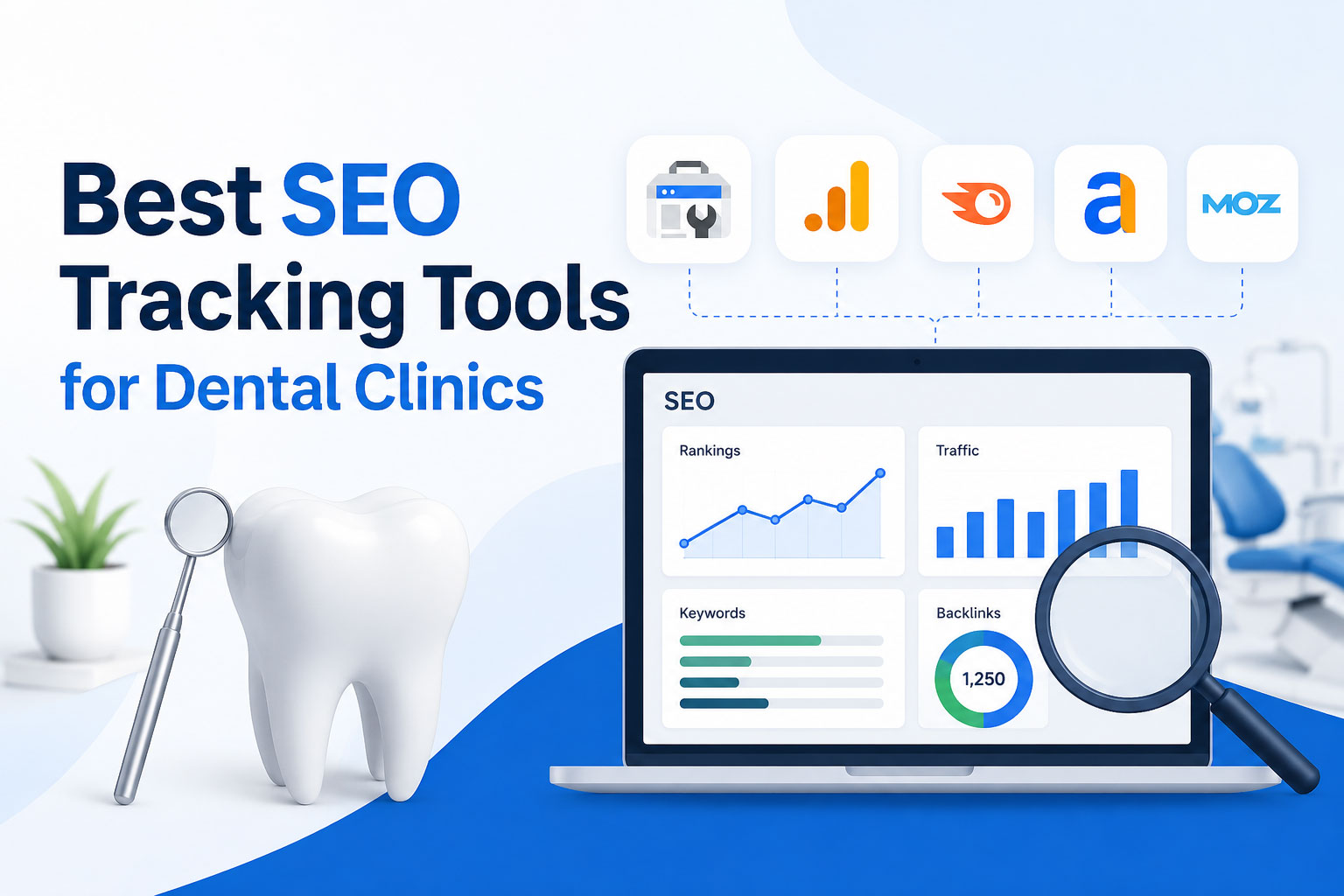
Google Search Console: Verifying organic performance, keyword rankings, and indexation issues
The foundational and free tool from Google. It tracks queries, keyword performance, indexing issues, and Top 10 rankings for free. However, it has limitations! It has no local Google Maps tracking or call data.
Google Analytics 4 (GA4): Tracking sessions, conversions, and patient bookings
The industry standard for measuring website interactions. GA4 tracks key events, click-to-call actions, and user behaviour to measure SEO ROI. But it doesn’t capture phone calls without call-tracking integration.
Ahrefs: Backlink analysis, competitor monitoring, and keyword tracking
A comprehensive platform best known for its powerful backlink analysis and keyword research. It helps identify why competitors outrank you and content gaps. A very useful for practices focused on building authority and outranking competitors.
SEMrush: All-in-one SEO platform with AI tracking and analytics
An all-in-one marketing suite that excels in local SEO. It tracks rankings across devices, AI search and competitor keywords, and Maps visibility. Best suited for practices that want comprehensive tracking, including emerging AI search visibility.
BrightLocal: Local SEO tracking specifically for service-area businesses like dental clinics
A specialised tool built for local business visibility. This monitors Google Business Profile metrics, local rankings, and citations using geo-grid tracking. Ideal for practices focused on dominating local search and Google Maps.
SERPROBOT: Budget-friendly keyword rank tracking with global coverage
An affordable and user-friendly rank tracker. It monitors keyword positions on mobile and desktop with simple dashboards to track SEO progress. Best for clinics needing basic keyword tracking.
Rank Math Analytics: WordPress-based dental websites with integrated SEO and analytics
A powerful SEO plugin for WordPress websites. It connects Search Console and GA4 to WordPress and provides SEO performance insights. Ideal for dental clinics using WordPress for their website.
Google Maps Tracking Tools Every Dental Clinic Should Know
-
Importance of Map Pack Visibility
The Local Pack captures 44% of local search clicks. Ranking in the top 3 helps dental clinics attract more nearby patients ready to book.
-
Geo-Grid Ranking Tools
Traditional trackers only show rankings from one location. Geo-grid tools reveal where your clinic ranks well or lacks visibility across your service area.
-
Tracking Suburb-Based Rankings
Patients often search using suburb or neighbourhood names. Tracking these rankings helps you stay visible in nearby areas where potential patients are searching.
-
Monitoring Local Competitors
Tracking tools show which competitors appear in the Map Pack and how they compare. This helps you refine your strategy and improve local visibility.
AI-Powered SEO Tracking Tools and Their Role in 2026
-
AI-Assisted Keyword Tracking
This automates keyword discovery and analysis. It reduces keyword research time while uncovering competitor gaps and content opportunities.
-
Predictive SEO Insights
This leverages AI to forecast future trends and ranking changes. Helping dental practices prepare for shifts in local search before they happen. It targets high-value keywords and uses AI to track search trends and ROI.
-
Automated Reporting Systems
AI-powered SEO tools consolidate information from multiple campaigns. It combines keyword, backlink, on-page, and AI visibility data into custom reports. This automation helps save time and delivers clear, actionable insights.
-
AI Trend Analysis for Local SEO
This identifies emerging dental search trends across local areas. AI tools track local treatment demand and monitor competitor changes across different suburbs. It reveals seasonal trends, emerging treatments, and search opportunities.
How Smart Dental Marketing Tracks SEO Performance for Clinics
If your dental clinic is ranking well but still isn’t seeing enough new patients walk through the door, the gap is usually tracking, not talent. Smart Dental Marketing works with Australian dental clinics to connect SEO performance to real outcomes — tracking clinic-approved keywords by treatment and suburb, Map Pack visibility, and every lead through to a booked appointment, so you always know what’s actually driving growth, not just what looks good on a dashboard.
Whether you want a clearer picture of your current SEO or a full strategy built around competitor gaps and growth metrics, the our team can help you figure out the right next step for your clinic.
Frequently Asked Questions
- What is the best SEO tracking tool for dental clinics?
There is no single best tool, as it depends on your practice’s needs. The most effective approach is combining tools and trackers for local rankings. - How often should dental clinics track SEO rankings?
Track weekly SEO check-ins! Review keyword rankings, website traffic, and GBP interactions. Set rank tracking to weekly for existing keywords and monthly for new campaigns. - Can SEO tracking tools measure patient bookings?
Yes! But you need proper attribution with call tracking and dedicated numbers for organic search visitors. - Why is Google Maps tracking important for dentists?
Google Maps tracking matters because the top 3 Map results get 44% of clicks. Making it essential for dental practices!