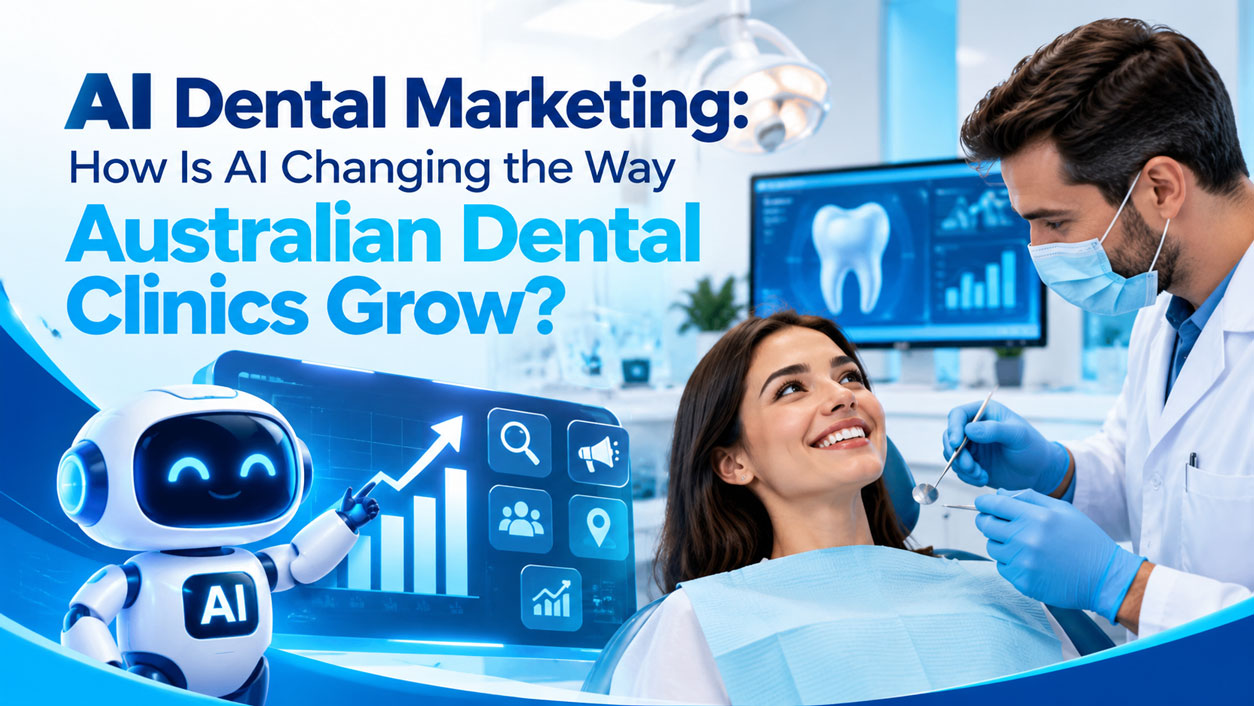
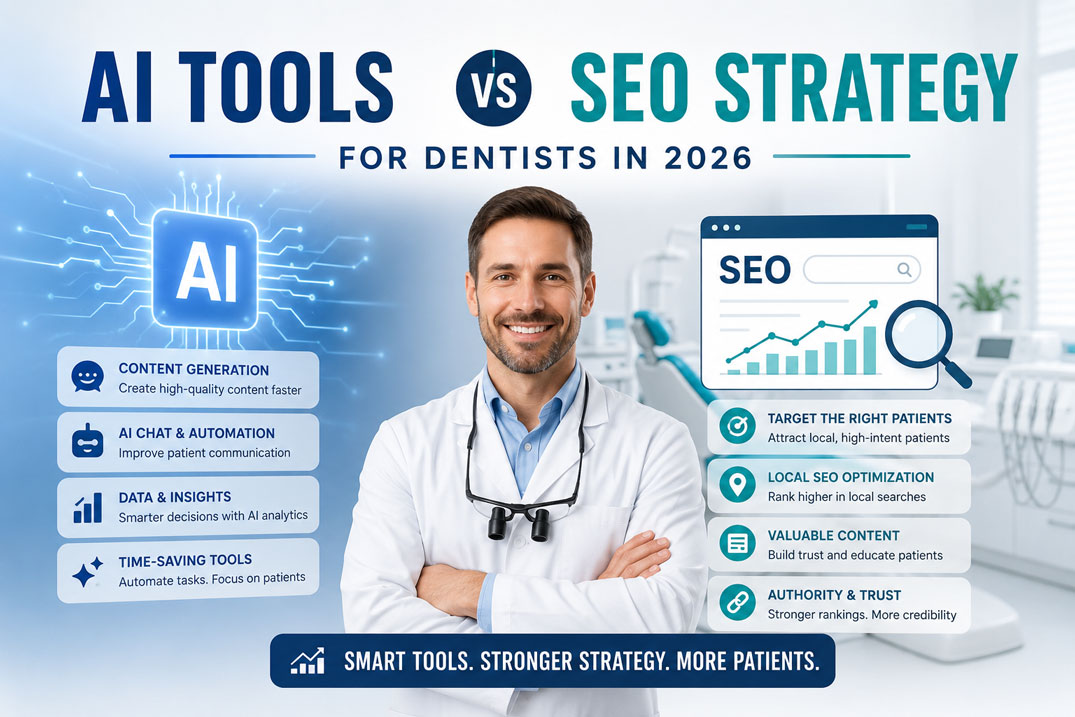
Many Australian dental clinics are spending money on AI tools and still not getting enough new patient bookings. If this sounds familiar, you are not alone. The problem is not the tools — it is the missing strategy behind them. This article explains the real difference between AI tools and SEO strategy, where each one fits in your dental marketing, and how to combine both so your clinic attracts more high-quality patients without wasting your budget.
Why So Many Clinics Feel Stuck Despite Using AI Tools
Running a dental clinic in Australia in 2026 means you are juggling patient care, staff management, and marketing all at once. It makes sense that AI tools feel like the perfect solution. They promise to save time, automate repetitive tasks, and make your clinic look active online.
The reality is that AI tools are genuinely useful for things like scheduling, sending appointment reminders, posting on social media, and drafting email campaigns. These are tasks that used to take hours each week, and AI handles them quickly. However, saving time on admin tasks is not the same as growing your patient numbers. A chatbot that answers enquiries after hours is helpful, but it cannot bring new patients to your website in the first place if no one can find you on Google.
This is the gap that many clinics are experiencing. They have efficient tools running in the background, but their Google rankings are low, their website traffic is flat, and new patient enquiries are inconsistent. The missing piece is a proper SEO strategy.
What SEO Actually Means for a Dental Clinic
SEO stands for Search Engine Optimisation, which simply means improving how your clinic appears in Google search results. When someone in your suburb types “dentist near me” or “teeth whitening in Parramatta,” SEO determines whether your clinic shows up or whether your competitor does.
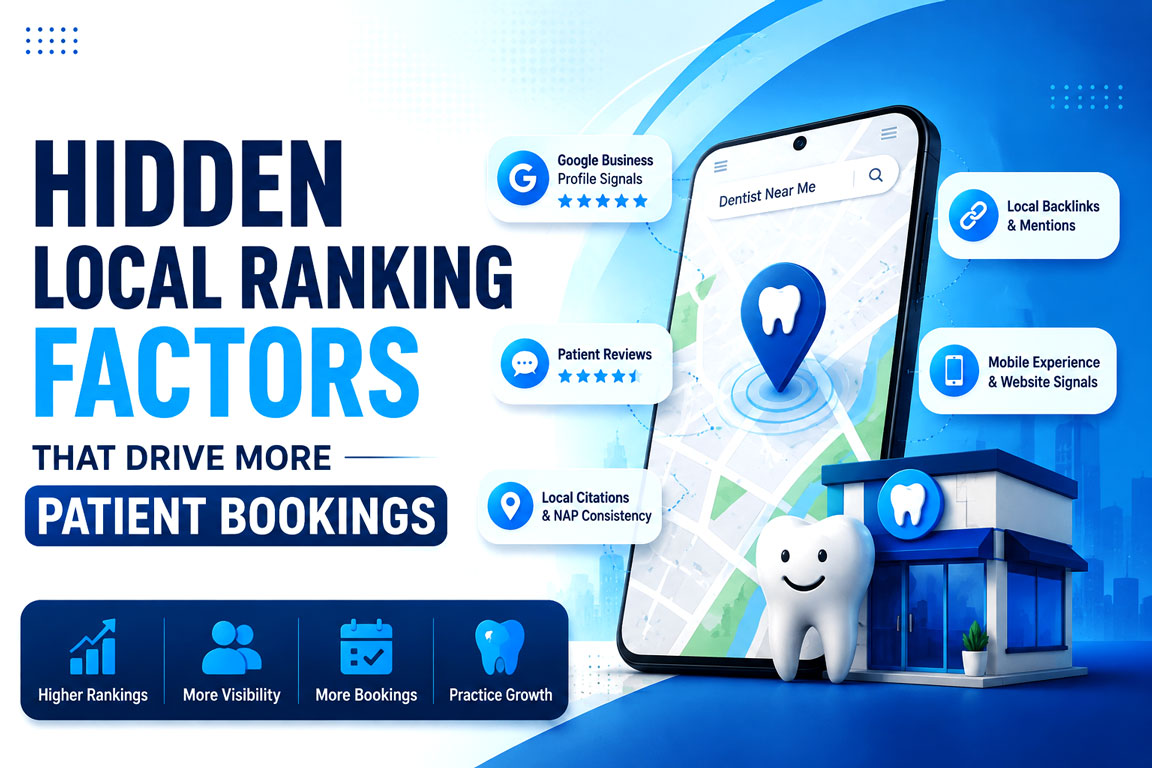
For dental clinics in Australia, local SEO is the most important type. This includes keeping your Google Business Profile accurate and up to date, earning genuine patient reviews, and creating content on your website that matches what local patients are actually searching for. Google rewards clinics that are consistent, trustworthy, and helpful — and that reputation takes time to build properly.
This is exactly why SEO and AI tools are not the same thing. SEO is a long-term strategy that builds your clinic’s visibility and authority online. AI tools are efficiency helpers that support your day-to-day operations.
Where AI Tools Actually Help in Dental Marketing
AI tools fit into specific parts of your marketing in a way that saves time and supports your overall strategy. Here is where they genuinely add value.
Content planning and drafting:
AI can help you brainstorm blog topics based on common patient questions and create first drafts that your team then reviews and improves. This speeds up your content output without replacing the need for expert, accurate information.
Paid advertising management:
Platforms like Google Ads and Meta Ads now use AI-based systems such as Performance Max and Smart Bidding to automatically adjust your ad spend and reach the right people. These systems work best when you feed them reliable data and keep your landing pages well-optimised.
Patient communication and retention:
AI-powered reminder systems send SMS and email prompts to reduce no-shows. Chatbots on your website can answer basic questions outside of business hours and guide patients toward booking. These tools reduce pressure on your front desk and improve the patient experience.
Reporting and analytics:
AI can connect your ad data, website traffic, and appointment information to show you which channels are actually driving bookings, not just clicks. This helps you spend your marketing budget where it is making a real difference.
Why SEO Remains the Primary Growth Driver for Dental Clinics
While AI tools handle efficiency, SEO is what drives consistent new patient growth. Here is why it remains essential in 2026.
Google rankings directly impact your revenue.
Research consistently shows that the top search results receive the majority of clicks. When a local patient searches for a dentist, they are ready to book. If your clinic appears at the top of those results, you receive that enquiry. If not, your competitor does.
SEO builds trust over time.
Clinics that rank well on Google are seen as credible and reliable by patients who have never heard of them before. A well-structured website with clear treatment information, genuine reviews, and helpful blog content signals to both Google and patients that your clinic is worth choosing.
SEO generates traffic without ongoing ad spend.
Unlike paid advertising, which stops the moment you stop spending, SEO continues to bring patients to your website for months and years after the work is done. A well-optimised page about dental implants or Invisalign can generate enquiries consistently without any additional cost.
Local SEO connects you with patients who are ready to act.
When someone searches “emergency dentist Sydney” or “children’s dentist Brisbane,” they are not browsing casually — they need help now. Local SEO ensures your clinic appears for these high-intent searches, turning Google users into booked appointments.
The Smarter Approach: Combining Both Without Losing Focus
The most effective dental clinics in Australia are not choosing between AI tools and SEO — they are using both in the right way. AI supports the workflow while SEO builds the foundation for growth.
A practical approach looks like this: use AI to research keywords faster and identify what local patients are searching for, then build proper SEO content around those insights. Use an AI chatbot on your SEO-optimised website to convert visitors who arrive through organic search. Use AI reporting tools to track which SEO pages and campaigns are delivering real bookings, then invest more effort into what is working.
At the same time, it is important to keep human oversight in place. AI-generated content should always be reviewed by someone in your team before it is published. Google has become significantly better at identifying generic, low-quality content, and publishing unedited AI drafts can actually hurt your rankings. Patients also notice when content feels robotic or impersonal, and that weakens trust in your clinic.
Common Mistakes Dental Clinics Should Avoid
Many clinics fall into predictable traps when it comes to AI and SEO. Chasing new tools without a clear strategy is one of the most common. It leads to a collection of subscriptions that do not connect with each other and do not contribute to measurable growth.
Ignoring local SEO basics is another significant mistake. If your Google Business Profile has outdated information, no photos, or very few reviews, you are invisible to many local patients regardless of how sophisticated your other marketing tools are.
Publishing AI-generated content without editing it carefully is also a risk. Google’s helpful content guidelines prioritise original, expert-level information that genuinely serves the reader. Content that is clearly produced by AI without clinical knowledge or local relevance will struggle to rank and may actively reduce your website’s authority.
Finally, measuring the wrong things leads clinics in the wrong direction. Tracking social media likes or website page views feels productive, but what matters is how many phone calls, form submissions, and booked appointments your marketing is generating. Focus on those numbers.
Ready to Grow Your Clinic With a Strategy That Actually Works?
If your dental clinic is getting lost on Google while your competitors keep filling their appointment books, it might be time to take a closer look at your marketing approach. Smart Dental Marketing works with Australian dental clinics to build SEO strategies that attract real local patients and deliver consistent, measurable growth — not just busier dashboards.
Whether you are starting from scratch or want to improve what you already have, the team at Smart Dental Marketing can help you figure out the right next step for your clinic.
FAQs
No. AI tools help you work more efficiently, but they cannot improve your Google rankings or build the local visibility that SEO creates. They serve different purposes and work best together.
Most clinics begin to see improved visibility and traffic within 3 to 6 months of consistent SEO work. Stronger patient growth typically follows with sustained effort over a longer period.
They are helpful but not essential for every clinic. If they help your team save time and stay organised, they are worth using. However, they should support your marketing strategy, not replace it.
Consistency matters most. Regular content updates, maintaining accurate business information, earning new patient reviews, and improving your website over time all compound into stronger rankings and steady patient growth.